Panic Attack Treatments That Work | Amatoria Medical
A large share of people who end up in an emergency room convinced they are having a heart attack are discharged with a clean EKG, normal labs, and a one line explanation. It was a panic attack. Come back if it happens again.
That is a medically correct discharge and a terrible treatment plan. The workup ruled out the thing that could kill you, which matters. It did not address the thing that is about to reshape your life, which is the fear of the next attack. This article covers what is actually happening in your body, why panic disorder takes hold so quickly, and which treatments have real evidence behind them.
What a Panic Attack Actually Is
A panic attack is a sudden surge of intense fear accompanied by a flood of physical symptoms that peak within about ten minutes. Your body activates its threat response, adrenaline hits the bloodstream, your heart rate and breathing accelerate, blood shifts toward large muscles, and your senses sharpen. Every part of that response is designed to save your life. The problem is that it fires with no threat in the room.
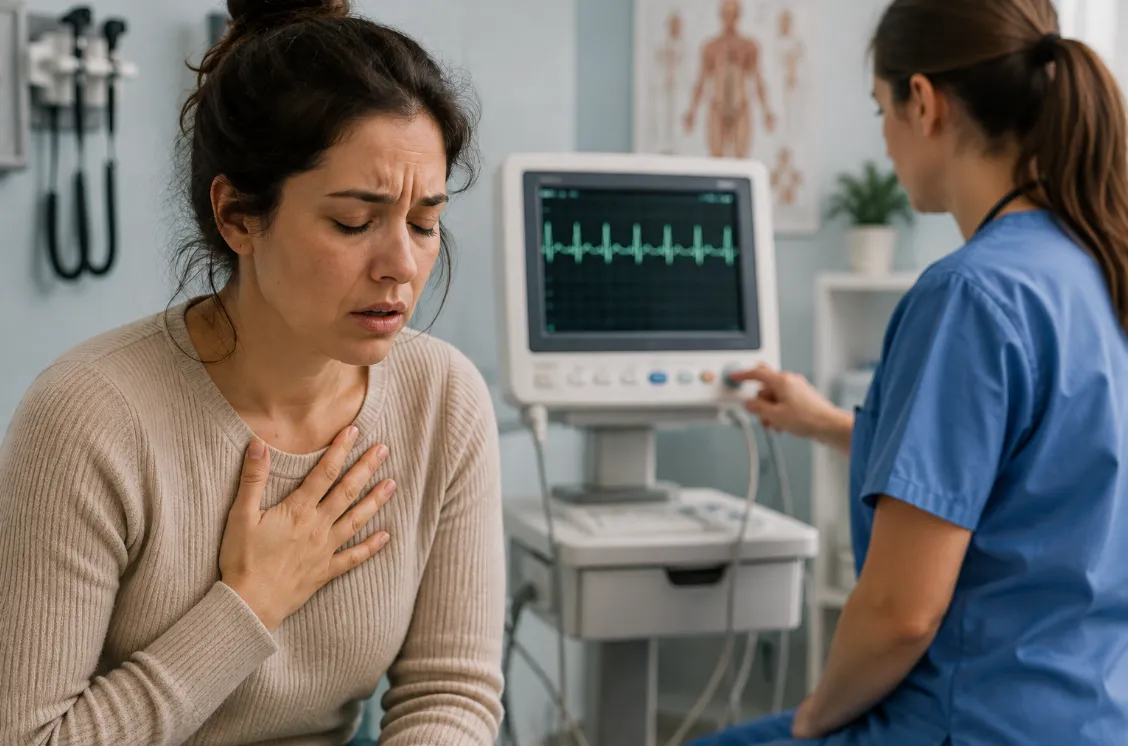
Panic attack symptoms commonly include a pounding or racing heart, chest pain or pressure, shortness of breath or a smothering sensation, dizziness, trembling, sweating, chills or heat flushes, numbness or tingling, nausea, a sense of unreality or detachment, fear of losing control, and fear of dying. Clinicians look for four or more of these appearing together and peaking rapidly.
Chest pain and breathlessness are why so many people go to the emergency department first. That instinct is reasonable. The overlap between panic symptoms and heart attack symptoms is genuine, and a first episode deserves a medical evaluation. Nobody should feel foolish for treating possible heart attack symptoms as an emergency.
Panic Attack, Anxiety Attack, and Panic Disorder Are Not the Same Thing
These terms get used interchangeably, and the difference changes the treatment.
An anxiety attack is not a formal clinical term. People usually use it to describe anxiety that builds gradually in response to an identifiable stressor and fades as the stressor passes. Anxiety symptoms in that pattern are uncomfortable but connected to something, and the symptoms usually ease once the situation resolves.
A panic attack arrives fast and often without warning. Unexpected panic attacks, meaning episodes with no obvious trigger, are the hallmark of panic disorder. Many people have one panic episode in their lifetime and never have another.
Panic disorder is diagnosed when recurrent unexpected attacks are followed by at least a month of persistent worry about future attacks, or by changes in behavior meant to avoid them. Roughly two to three percent of American adults meet criteria in a given year, according to the National Institute of Mental Health. Anxiety conditions are among the most common mental disorders in the United States. Panic disorder is distinct from generalized anxiety disorder, where worry is chronic and spread across many life domains, and from social anxiety, where fear centers on being judged by others. A person can have more than one of these mental health disorders at the same time, which is why an accurate diagnosis matters before starting treatment.
Why One Attack Becomes a Pattern
This is the part almost nobody explains in the emergency department, and it is the most important thing to understand.
After a first attack, the brain does what it is built to do. It flags the experience as dangerous and starts scanning for signs that it is happening again. That scanning is called anticipatory anxiety, and it raises baseline anxiety levels enough to make another attack more likely. Meanwhile you start avoiding places associated with the first one. The freeway, the grocery store, the gym, being alone, being far from a hospital.
Every avoidance gives short term relief and long term reinforcement. The message your nervous system receives is that you escaped something real. The fear grows and the world shrinks. This loop, not the attacks themselves, is what turns a frightening night into a mental health condition, and it is what effective treatment is designed to interrupt.
Panic Attack Treatments With Real Evidence
Cognitive behavioral therapy
Cognitive behavioral therapy is the most studied and most effective treatment for panic disorder, with meaningful improvement in a large majority of patients across clinical trials. It is not general talk therapy. This approach targets the catastrophic interpretation directly, teaching you to recognize that a racing heart is uncomfortable rather than dangerous, and it systematically dismantles avoidance. Most protocols run roughly eight to sixteen sessions. You may see it written as cognitive behaviour therapy in international research, which is the same approach.
Interoceptive exposure
This is the piece that separates panic disorder treatment from ordinary anxiety care, and the piece most people have never heard of. Exposure therapy for panic does not primarily involve exposure to places. It involves deliberately reproducing the bodily sensations you fear, in a controlled setting, until they stop signaling danger. Spinning in a chair for dizziness, breathing through a straw for breathlessness, brief cardio to raise the heart rate. Done with a clinician, it retrains the alarm at its source, and it is one reason the right therapy outperforms medication alone over the long run.
Medication
Selective serotonin reuptake inhibitors are the first line antidepressant medicine for panic disorder. Common medicines in this class include sertraline, escitalopram, fluoxetine, and paroxetine. This antidepressant class typically takes four to six weeks to reach full effect, and they are often started at a low dose in panic patients because early activation can temporarily increase anxiety. SNRIs such as venlafaxine are a reasonable alternative. A tricyclic antidepressant such as imipramine or clomipramine has solid evidence as well and is generally reserved for people who do not respond to newer options, since side effects are heavier.
Benzodiazepines are the antianxiety medicine most people picture, and they stop an acute attack quickly. They also carry tolerance and dependence risk, and there is a specific catch in panic disorder. Taking one at the first sign of an attack can teach your brain that the pill prevented a catastrophe, which reinforces the fear the therapy is working to undo. Careful medication management with a psychiatric prescriber matters more here than in most conditions.
Breathing and relaxation techniques
Slow paced breathing, progressive muscle relaxation, and grounding exercises are useful support tools that lower overall arousal. They work best as maintenance rather than rescue, since using them frantically mid attack turns them into another avoidance behavior. The goal is not to stop the attack. The goal is to stop fearing it.
The lifestyle inputs that actually move the needle
Caffeine is a legitimate trigger and worth eliminating during treatment. Alcohol is worse than it appears, because rebound anxiety peaks hours later and often overnight. Short sleep lowers the threshold for the next attack. Regular aerobic exercise has modest but real evidence in panic disorder, partly because it repeatedly exposes you to an elevated heart rate in a safe context.
What the Timeline Looks Like
People generally start noticing change within four to six weeks of beginning a structured plan. Attacks tend to become less intense before they become less frequent, and confidence in previously avoided situations usually returns last. Frequent panic attacks can go quiet fairly quickly on medication while the underlying fear stays intact, which is exactly why the therapy component matters. Skipping it is the most common reason panic returns after someone stops their prescription.
A reasonable treatment option for most people is combined care, meaning structured therapy plus medication if attacks are frequent or severely limiting, with a plan for tapering the medication later.
When to Get Checked Medically First
Panic is a diagnosis of the whole picture, not a default label for unexplained chest pain. Thyroid disease, arrhythmias, certain medications, stimulant or decongestant use, low blood sugar, and substance withdrawal can all produce identical symptoms. A first episode, a change in the pattern, or symptoms that appear during exertion rather than at rest all deserve medical evaluation. Good mental health treatment starts by confirming that the physical workup is genuinely complete.
If you are ever having thoughts of harming yourself, call or text the 988 Suicide and Crisis Lifeline, which is available around the clock.
Getting Treatment in Tooele
Amatoria Medical provides behavioral health care alongside primary care, which means the medical workup and the psychiatric evaluation can happen in the same place rather than across two disconnected systems. Tyson Brinkerhoff, PMHNP, provides evaluation, medication management, and CBT informed care for panic disorder and related anxiety disorder diagnoses. Telehealth appointments are available if leaving the house currently feels like the hardest part, and online therapy visits can be a practical starting point when avoidance is already limiting you.
We accept most major insurance plans and Medicare, and we are accepting new patients. Call 435-244-3143 to schedule.
Common Questions About Panic Attacks
Can a panic attack actually hurt me
No. The symptoms are the result of a normal stress response firing at the wrong time. It is exhausting and frightening, and it is not physically dangerous once cardiac and other medical causes have been ruled out. Understanding that is itself part of treatment.
How long does a panic attack last
The surge peaks within about ten minutes and usually subsides within twenty to thirty. What often lingers for hours afterward is fatigue and residual anxiety, which many people mistake for a continuing attack.
Do I have to take medication
Not necessarily. Therapy alone resolves panic disorder for many people. Medication is added when attacks are frequent, when avoidance is severe, or when another mental illness such as major depression is present alongside it.
Will panic disorder come back
Relapse is possible, particularly during high stress periods, and it responds well to a brief return to the same skills. People who completed exposure work rather than relying only on a prescription tend to hold their gains longer.
Why did this start when nothing was wrong
Panic frequently surfaces after a stressful stretch has ended rather than during it, which is one reason it feels so random. Genetics, sleep debt, stimulants, and cumulative stress all contribute. The absence of an obvious cause does not mean the response to treatment will be any worse.
